Highlights:
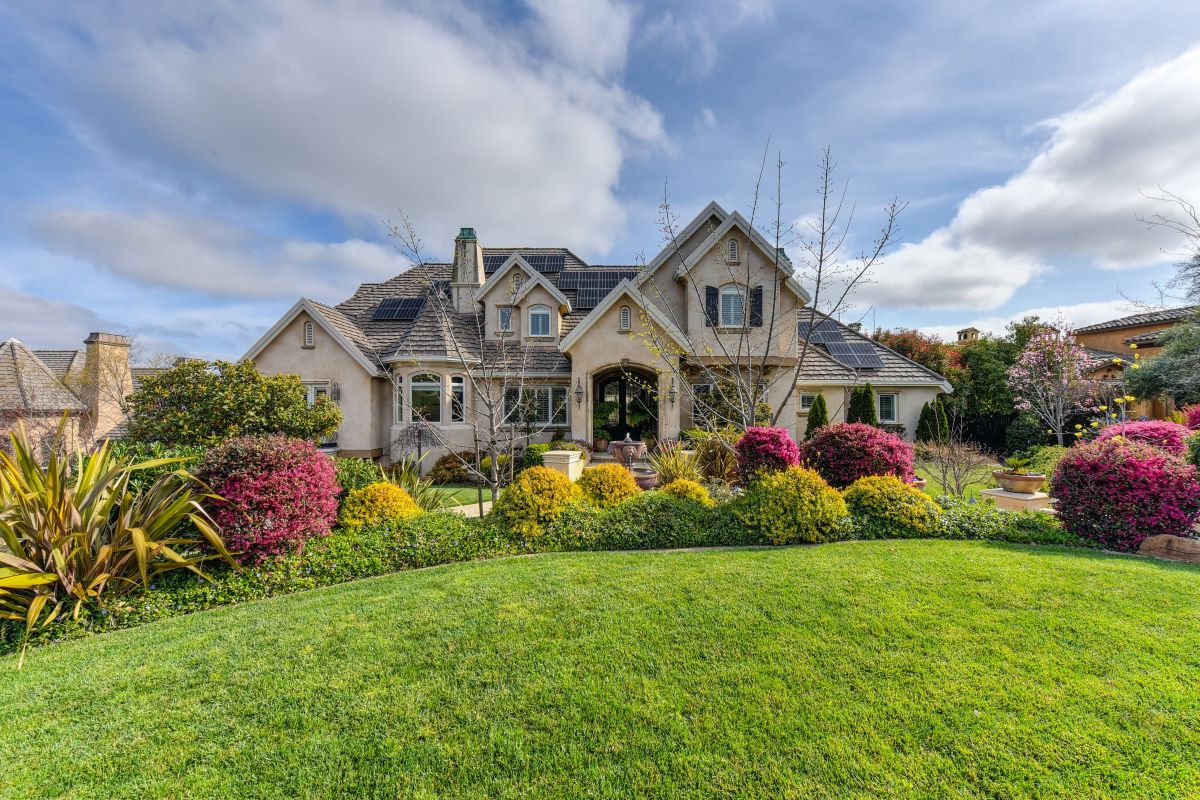
- Well-maintained curb appeal isn’t just cosmetic — a 2025 UTA study found homes with strong curb appeal sold for an average of 7% more than comparable homes nearby.
- Real estate professionals back this up in practice: 92% of Realtors recommend improving curb appeal before listing, and 97% consider it important for attracting buyers.
- Choosing flowers that bloom at different times (crocuses and daffodils early, tulips and hyacinths mid-spring, peonies and lilacs later) keeps color going for months instead of just a week or two.
- Planting in odd-numbered groups and layering by height (tall in back, low growers up front) makes a bed look intentional rather than random.
- Repeating two or three colors across different areas of the yard creates visual rhythm and ties the whole property together.
- Low-maintenance habits — mulching, deep watering, deadheading, and letting bulb foliage die back naturally — keep beds looking sharp without constant upkeep.
- Even a single well-designed bed near the entryway, paired with a couple of containers, can meaningfully change how the whole house reads from the street.
Winter finally loosens its grip, and suddenly your front yard has a job to do again. After months of bare branches and dormant lawns, spring is the season when your home gets to show off, and nothing does that faster than a well-planned bed of blooming flowers. Whether you’re planning to sell this year or you just want your street to notice your house for a good reason, the flowers you choose for your front beds, borders, and containers matter more than most homeowners realize.
Below, we’re breaking down ten spring blooming flowers that deliver serious curb appeal, plus a few tips on layout, care, and timing so your yard actually looks intentional instead of thrown together. We’ll also dig into what the data says about why this effort is worth it in the first place.
Why Your Front Yard Deserves as Much Attention as Your Front Door
It’s easy to pour money into a new front door, a fresh coat of paint, or updated house numbers while treating the landscaping as an afterthought. But research keeps pointing to the same conclusion: the plants in front of your house carry real, measurable weight.
A 2025 study out of the University of Texas at Arlington, published in the Journal of Real Estate Finance and Economics, found that homes with strong curb appeal, meaning tidy landscaping, well-kept exteriors, and an inviting entry, sold for an average of 7 percent more than comparable homes in the same neighborhood. The researcher behind the study noted that this premium becomes even more noticeable in markets where inventory is high and buyers have more homes to choose from, which is exactly the kind of market where a colorful, well-maintained front bed can be the difference between a showing and a drive-by.
That kind of premium isn’t just an academic finding, either. It lines up with how real estate professionals actually behave in the field. According to the National Association of Realtors’ Remodeling Impact Report on outdoor features, the overwhelming majority of Realtors, 92 percent, tell their sellers to spruce up curb appeal before putting a home on the market, and 97 percent consider curb appeal an important factor in attracting a buyer in the first place. In other words, agents aren’t guessing about this. They’re watching it play out with real buyers, over and over, and flowers are one of the fastest, most affordable ways to act on that advice.
Put those two data points together and the takeaway is simple: a thoughtfully planted spring garden isn’t just a nice-to-have. It’s one of the more efficient investments you can make in how your home is perceived, whether that perception belongs to a potential buyer, a neighbor, or just you, walking up your own driveway after a long day.
Ten Spring Blooming Flowers That Make a Statement
Not every flower earns its spot in a front bed. The best options for curb appeal tend to share a few traits: they bloom early and reliably, they hold color for weeks rather than days, and they look good in groups rather than as scattered single plants. Here are ten that consistently deliver.
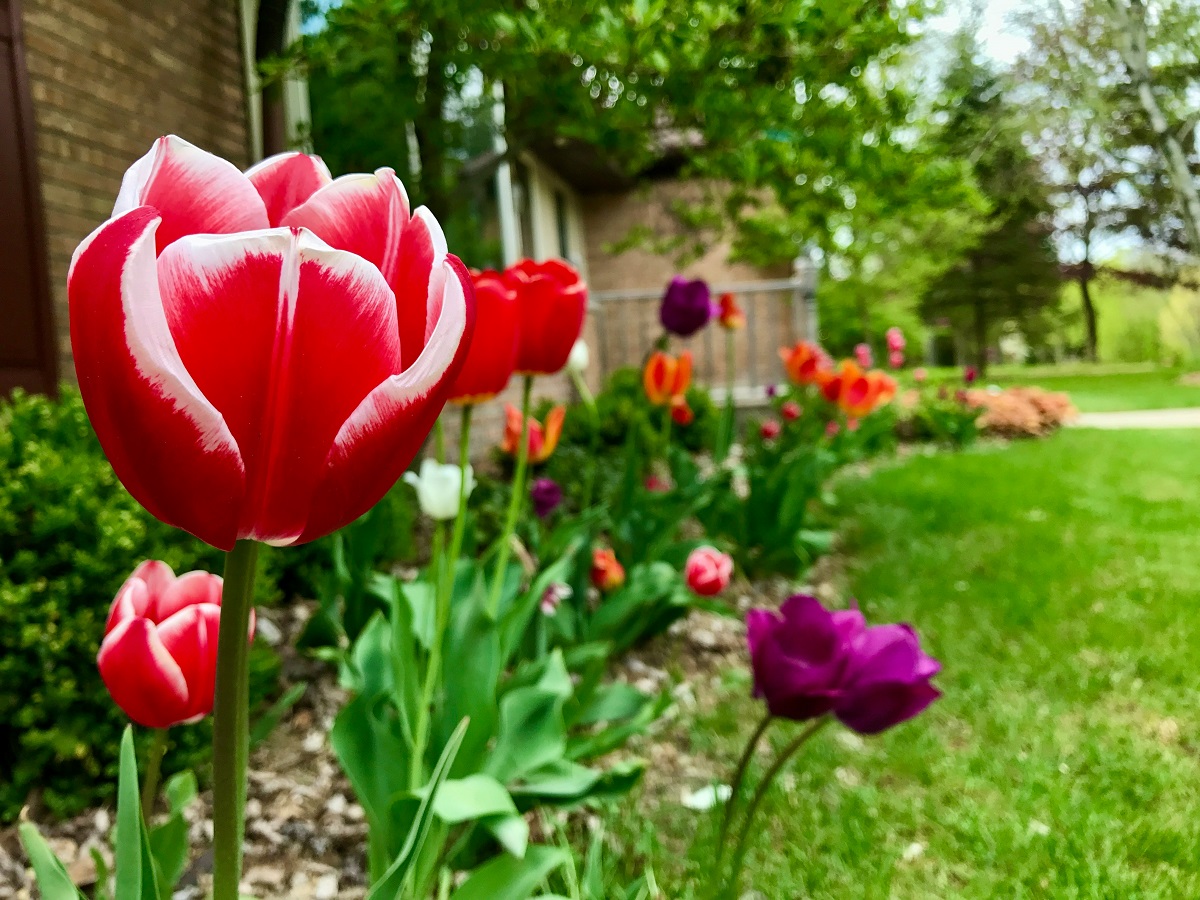
- Tulips: The classic spring flower for a reason. Tulips come in nearly every color imaginable and look best planted in clusters of a dozen or more rather than spaced out individually. Plant bulbs in the fall for a bold, coordinated show along walkways or under windows.
- Daffodils: Cheerful, deer-resistant, and reliably perennial, daffodils multiply on their own over the years, so a modest planting now can turn into a thick, golden drift within a few seasons.
- Hyacinths: These are the fragrant showstoppers of early spring. A row of hyacinths near an entryway does double duty, adding color and scenting the air every time someone walks up to your door.
- Crocuses: Often the very first flowers to appear, sometimes even pushing through leftover snow. Scatter them through the lawn or along a border for an early pop of purple, yellow, or white before anything else has woken up.
- Peonies: Big, lush, and unmistakably elegant, peonies bloom a little later in spring but are worth the wait. Their oversized blooms make a strong visual anchor for a front bed and the plants can live for decades with minimal care.
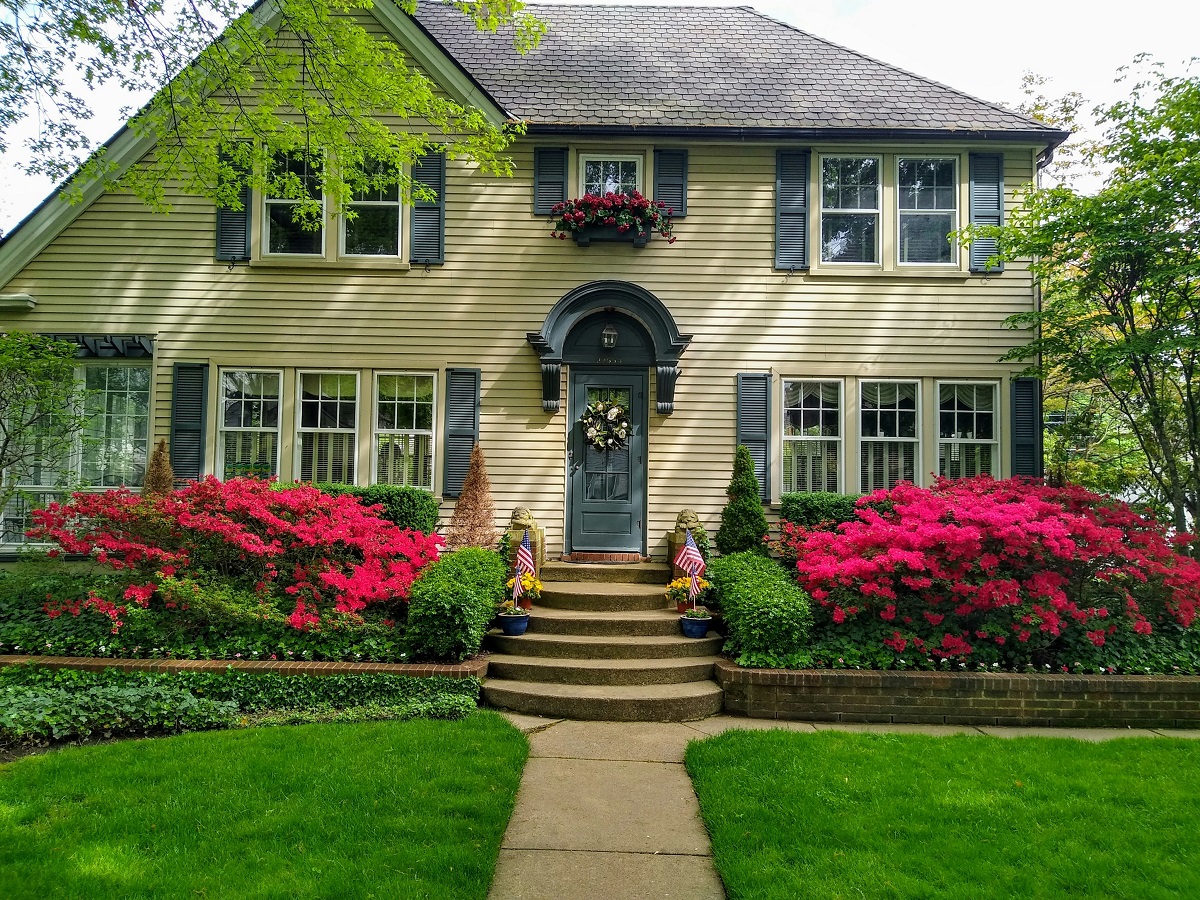
- Azaleas: For homeowners who want serious color without a lot of fuss, azaleas are hard to beat. These flowering shrubs explode with pink, red, white, or purple blooms and work well as foundation plantings along the base of the house.
- Lilacs: A lilac in full bloom is one of the most recognizable signs that spring has arrived. Beyond the visual impact, the fragrance alone makes this shrub worth a spot near a porch, patio, or open window.
- Pansies: Cold-tolerant and available in an enormous range of colors and patterns, pansies are ideal for containers, window boxes, and border edges. They can go in the ground earlier than most spring flowers, which means color sooner rather than later.
- Bleeding Heart: With its distinctive heart-shaped blooms dangling from arching stems, bleeding heart adds texture and a slightly romantic feel to shaded front yards where other flowers might struggle.
- Creeping Phlox: This low, spreading groundcover blankets slopes, borders, and rock gardens in a solid sheet of pink, purple, or white. It’s especially useful for filling awkward spaces or softening the edge of a walkway.
Designing a Front Bed That Actually Looks Pulled Together
Picking great flowers is only half the job. How you arrange them determines whether your yard looks curated or chaotic. A few principles go a long way here.
- Group in odd numbers. Plantings in groups of three, five, or seven tend to look more natural than pairs or even numbers, which can read as stiff or overly formal.
- Layer by height. Put taller flowers like peonies and lilacs toward the back or center of a bed, medium height flowers like tulips and daffodils in the middle, and low growers like pansies or creeping phlox along the front edge.
- Repeat colors across the yard. Instead of scattering every color you like in one spot, repeat two or three coordinating colors in different areas of the front yard. This creates a sense of rhythm that ties the whole space together.
- Leave room to grow. Many perennials, especially daffodils and peonies, spread or multiply over time. Give them breathing room now so you’re not digging everything up and dividing it in three years.
If you want to brighten up your home for spring without a full landscaping overhaul, even a single well-designed bed near the entryway, paired with a couple of large containers by the front door, can transform how the whole property reads from the street.
Timing Your Blooms for a Longer Show
One common mistake is planting flowers that all bloom at once and then fade together, leaving weeks of bare green in between. A smarter approach is to stagger bloom times so something is always flowering from early March through late May.
- Crocuses and early daffodils kick things off, often appearing while there’s still a chill in the air.
- Hyacinths and tulips follow a few weeks later, overlapping slightly with the earliest bloomers.
- Pansies, planted in fall or very early spring, bridge gaps by blooming steadily through cooler stretches.
- Azaleas and lilacs typically hit their peak in mid to late spring, adding volume right as the earlier bulbs start to fade.
- Peonies and bleeding heart close out the season, carrying color into late spring and, in cooler climates, even early summer.
Mapping out this kind of succession takes a little planning up front, but it means your curb appeal isn’t a one-week event. It’s a rolling show that keeps evolving for two or three months straight.
Low-Maintenance Ways to Keep Everything Looking Its Best
A gorgeous spring bed doesn’t have to mean hours of weekend labor. A little consistency beats occasional heroics.
- Deadhead spent blooms on flowers like pansies and peonies to encourage more flowering and keep beds looking tidy.
- Mulch around plantings to suppress weeds, retain moisture, and give beds a clean, finished look even before anything blooms.
- Water deeply but infrequently rather than a light daily sprinkle, which encourages stronger root systems.
- Let bulb foliage die back naturally after blooming instead of cutting it early. The leaves are feeding next year’s flowers, even though they look a little ragged for a few weeks.
- Divide overcrowded perennials like daffodils or peonies every few years to keep them blooming vigorously rather than competing for space and nutrients.
Wrapping Up
Spring flowers are one of the rare home improvements that pay off in more than one currency. They lift the mood every time you pull into the driveway, they give neighbors and guests a reason to compliment your place, and, if the research is any indication, they can genuinely influence how your home is valued and perceived by anyone considering buying it. Start with two or three of the flowers above, focus on a spot near your entryway or front walk where people naturally look, and build outward from there. A little bulb planting in the fall or a weekend of shrub and perennial shopping in early spring is a small investment for a front yard that finally matches the effort you’ve put into everything else about your home.